What affects prototype lead time?
When developing a new product, the aim is often to get a prototype ready for testing as quickly as possible. But what actually determines its lead time? And what can customers do to influence how quickly their prototype is completed?
We asked two Meconet experts which factors affect prototype lead time. Read their perspectives on prototype manufacturing and quality.
Jari Peura | Prototype Specialist
“The lead time depends a great deal on what information the customer already has available. Is there a drawing or a sketch with dimensions, or are we starting with just an idea? The required batch size also affects how we plan the work: manufacturing a single prototype is different from producing a larger trial batch.
At the start of the project, we assess the component’s manufacturability. A prototype can usually be made without new tooling, but sometimes a tool is needed. A simple tool may be ready in a few days, while more complex tooling can take several weeks to manufacture. This is important to take into account when planning the schedule.
We also often suggest making prototypes in several material thicknesses at the same time. With springs, for example, material thickness has a significant impact on how the product functions. This allows the customer to compare alternatives in the first tests, without necessarily having to place another prototype order to try different thicknesses. It can save several weeks in product development.”
Jan Jusslin | Quality
“Quality and material requirements should be clarified as early as possible. If specific requirements have been set for material strength, thickness or surface treatment, they affect how the prototype can be manufactured. Lead times for materials also vary.
It is important to know what the prototype will be used for. Will it be used to test the product’s shape and fit, for example, or also its mechanical strength? This affects the requirements for materials, dimensional accuracy and manufacturing quality.
When we know what the prototype is intended to test, we can select a suitable manufacturing method and avoid unnecessary work stages or changes later on.”
What do these perspectives have in common?
Smooth prototype manufacturing starts with a shared understanding: what is being manufactured, what batch size is needed and what will the prototype be used to test? When the initial information and material and quality requirements are clear early on, a suitable manufacturing method can be selected and unnecessary changes avoided.
What can the lead time look like in practice?
When the materials and initial information are ready and no new tooling or surface treatments are required, the customer can generally receive the prototype within one week.
If drawings need to be prepared first, the schedule might look like this:
- Preparation of drawings and the complete drawing package: 2–4 working days
- Prototype manufacturing: 1–5 working days
Surface treatments and the manufacture of any required tooling extend the schedule. Painting or zinc plating, for example, typically adds around one week to the lead time. If several surface treatments are needed in sequence, more time should be allowed.
The final lead time therefore always depends on the project’s starting point and requirements.
Planning a prototype?
Involve our experts early in the process. We can support you in turning your idea into a solution that can be tested and manufactured.
You might also be interested in
Vantaa – a Versatile Factory for Pressing and Assemblies
Our Vantaa plant brings together pressing, multi-slide technology, and assembly for efficient complete solutions.

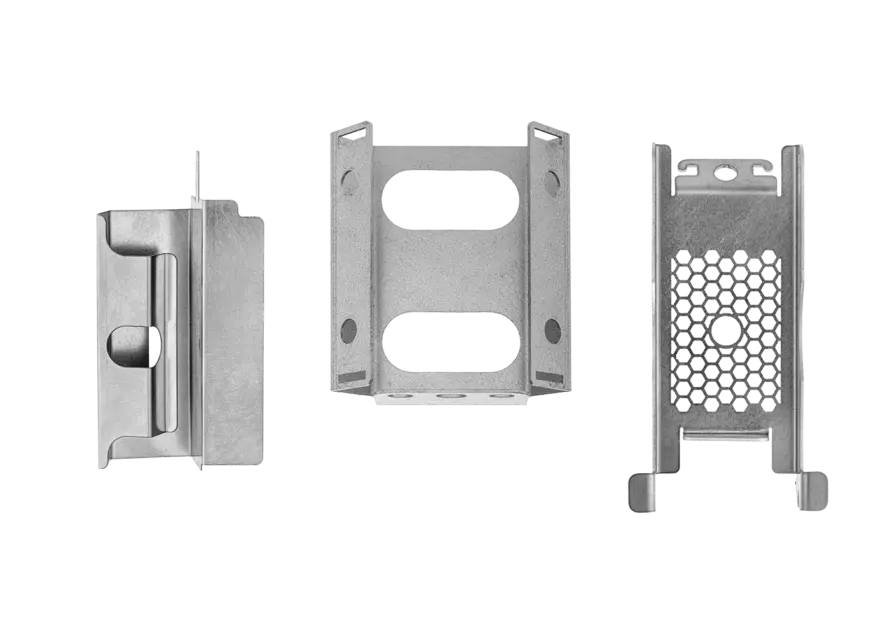
Prototype Design and Manufacture
Prototypes are an important part of product development process. Prototypes can be used to test the functionality, structure, and manufacturability of a product prior to launching serial production.
Our experts are here to help
By involving us from the earliest stages of design, you give us the best opportunity to support you. You can also contact us at any stage – we are happy to help.